Kisun Kim explains how adapting to COVID-19 at the Learning Exchange shifted her academic path and understanding of the Downtown Eastside.
November 17, 2021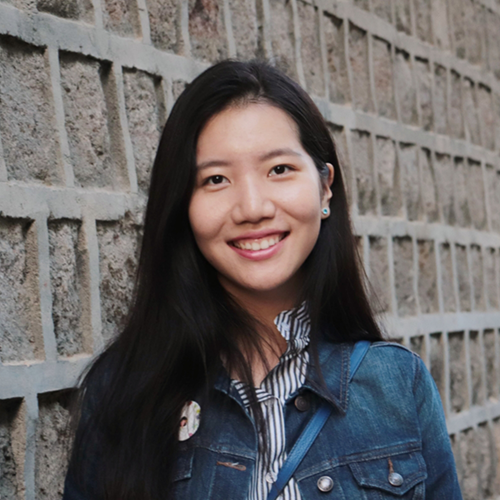
Kisun Kim, UBC iSchool student and former English Conversation Program Assistant at the UBC Learning Exchange.
Name: Kisun Kim
Faculty: UBC iSchool
Program: MAS/LIS dual degree (Master of Library and Information Studies, Master of Archival Studies)
Learning Exchange role: Work Learn: English Conversation Program Assistant, 2020
Home town: London, Ontario
Current location: Vancouver
UBC degree conferred: TBD
-
- How did you hear about or get involved with the Learning Exchange? What did you know about the Downtown Eastside?
I moved to Vancouver in January to pursue a dual degree at the UBC iSchool. Before coming here, I earned a Master of Arts in history from the University of Western Ontario and have worked in various cultural heritage organizations. As I was looking for a job, I came across the posting for the English Conversation Program (ECP) assistant. While I did not really know what it would entail, I thought it was an exciting opportunity to empower and connect with immigrant communities in Vancouver. As an immigrant myself, this was and is an important aspect of the job to me.
I have to admit that I did not know anything about the Downtown Eastside. Before moving to Vancouver, I had taken a family trip here. As a part of a package tour, I remember we drove through the Downtown Eastside and looked at the people as tourists would. Even then, the tour felt uncomfortable. When I applied for the job, I didn’t make the connection that the area I toured through was the same area as the job. Only when I came for an interview, it dawned on me.
-
- What did you do at the Learning Exchange?
When I first started in January, we were still working in person. I got to learn about the Downtown Eastside by speaking with learners, spending time in the Drop-In, and doing the self-guided neighbourhood walks. Otherwise, I spent most of the time on administrative duties—greeting learners, preparing lessons, and recording attendance.
Then in March we were sent home because of the pandemic and we cancelled our programs. When it became clear this was not a short-term situation, we started investigating online programming. After a successful pilot, we decided to offer more. Soon I was creating various tech guides not only for learners but also for staff and volunteer facilitators. My job changed dramatically as I started to work more with technology, but the values remained the same—we continued to use community-based, strength-based, and user-centred approaches.
Interestingly, I also got to know our learners and facilitators on a more personal level because now I had to sit in on classes to ensure there were no tech hiccups. I got to hear learner stories and interact with them on another level. I soon learned that ECP is not only helping seniors learn English but is connecting them with their community. I am so glad that this is something that I got to be part of and learn about.
-
- How did your experience at the Learning Exchange influence your academic and/or career path?
As my work shifted online, I began to work more closely with technology, which was not originally part of my job description. I had often thought of technology as an agent of capitalism—something designed to keep us in consumerist roles—but it became clear that it can also be used to build community, to connect us as people. I also began to be interested in the way technology and information interact and the ways we can make that interaction more user-friendly.
Although I knew iSchool offered several tech and information courses, I didn’t consider this as a career option until Spring [Gillard], my supervisor, prompted me to consider it. Spring was the first person to point out that I have the ability to make technology accessible, which I hadn’t thought of before. It made me ponder and reflect on my skills and interests. I started to think digital records/digital information might be a career path I want to pursue.
I’ve now decided I’m going to take more courses on information governance, data services, and digital records at iSchool to further explore these ideas. For example, I took a course called “Socio-Technical Perspectives of Information Systems” this summer. I remember looking at this before thinking, ‘I would never take that class,’ but here I am.
-
- How did your understanding of the Downtown Eastside change?
Before I started working at the Learning Exchange, the words I associated with Downtown Eastside were drugs, homelessness, and poverty, thanks to that tour. It soon became clear that the Downtown Eastside is a culturally vibrant and positive community with a rich history and a strong sense of community. The strength and resilience of the Downtown Eastside community amazes me!
-
- How do you think the LE was influenced by your involvement?
In addition to the tangible parts that I’ve already described, I think I was able to bring a more nuanced perspective when it comes to diversity and inclusion. I strive to approach my school work and professional work from a postcolonial perspective. I remember when we were preparing a lesson, the article in the lesson equated “westernization” to “modernization,” which is problematic. These are not synonyms! I therefore flagged it and made sure that phrase was replaced by more inclusive language. Another example is when our facilitators referred to the lunar new year as the Chinese New Year. Many non-Chinese Asian cultures celebrate the lunar new year! As an immigrant myself, I understand how important it is to use inclusive language in an everyday environment because language learners will pick up the words they hear people use, whether those words are politically correct or not. So simple changes I described can make our classrooms more inclusive!
Want to explore more student learning opportunities at the UBC Learning Exchange? Learn more here.
Related stories

WATCH: ‘What is the Learning Exchange?’

Three honors for three team members in three months

COMMUNITY VOICE: UBC Tandem study meets the DTES CREW